Mood Tracker Template for KDP Interiors: A Practical Tool for Emotional Awareness
Tracking how you feel each day sounds simple, but most people quickly realise it’s harder than it looks. You might recall a stressful Tuesday or a particularly joyful weekend, but the subtle shifts in your mood often get lost in the rush of daily life. That’s where a structured layout like the Mood Tracker Template - KDP Interior steps in. It’s not just about logging emotions; it’s about creating a system that reveals patterns you didn’t know existed. Whether you’re designing for yourself, a client, or a niche market on Amazon, this template offers a foundation that adapts to real human needs.
How Different People Use a Mood Tracker in Everyday Life
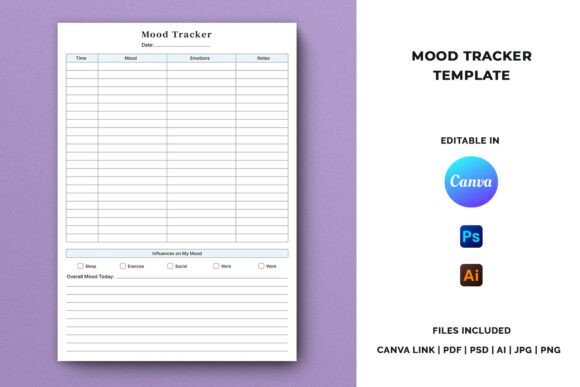
Mood tracking isn’t one-size-fits-all. A college student trying to understand exam anxiety uses it differently than a busy parent managing stress, and a therapist might assign it as homework. The Mood Tracker Template - KDP Interior accommodates these varied scenarios because it includes spaces for emotions, daily notes, influences, and overall mood. That extra section for influences is often what makes the difference between vague awareness and actionable insight.
Therapists and Mental Health Coaches
If you work in mental health—whether as a licensed therapist, a life coach, or a support group facilitator—you probably ask clients to track moods between sessions. A generic notebook might work, but the structured layout of this template helps people focus. For example, a client with depression can note not just sadness, but also what influenced it: lack of sleep, a difficult conversation, or a skipped meal. Over weeks, you both spot triggers. The Mood Tracker Template - KDP Interior becomes a conversation starter, not just a diary entry. Its print-ready design means you can provide physical copies to clients who prefer analog tools over apps.
Individuals Practicing Self-Care or Journaling
Many adults in their 20s to 50s turn to journaling for stress relief or personal growth. But journaling without structure can feel aimless. A daily prompt like “overall mood today” forces a moment of honesty. I’ve seen people use this template to track their energy levels alongside emotions, noticing that irritability often follows poor nutrition. The daily notes section lets you vent without judgment, while the influences column connects dots. For someone navigating a breakup or a career change, this template offers a low-pressure way to check in with themselves without needing to write paragraphs.
KDP Publishers and Printable Business Owners
If you’re in the low-content publishing space, you know that buyers want interiors that look professional and feel complete. The Mood Tracker Template - KDP Interior hits that sweet spot because it’s optimised for Amazon KDP with CMYK, 300 DPI, and A4 sizing. But beyond specs, it sells because it addresses a genuine need. People searching for mood trackers on KDP often want a simple, attractive layout they can start using immediately. They don’t want to design from scratch. By offering editable source files in Canva, AI, PSD, and more, you give buyers flexibility—they can rebrand it, tweak the language, or adjust the layout for their planner series.
Scenarios That Highlight the Template’s Versatility
The value of any template lies in how it behaves in real use. Let’s explore situations where the Mood Tracker Template - KDP Interior proves particularly useful across different industries.
Wellness Retreats and Workshops
Imagine you’re running a weekend wellness retreat. Participants are learning about emotional intelligence, and you want a takeaway tool they can use long after the event. A mood tracker printed on quality paper feels tangible and intentional. The influences section helps them remember that a guided meditation or a group exercise lifted their spirits. Because the template is editable in Canva, you can add your branding, workshop logo, or specific prompts like “gratitude moment” without much effort. For coaches who sell workbooks online, this template can become a cornerstone product—just bundle it with a guide on interpreting mood patterns.
Corporate Wellness Programs
Companies increasingly invest in employee mental health, but they need discreet tools. A mood tracker inside a wellness journal given to staff can help without feeling invasive. Employees note daily moods and influences, but nobody sees it but them. The structured layout encourages honest reflection, which can reduce burnout when used consistently. HR departments might distribute these during mental health awareness months. Since the template is fully editable, you can customise the language to fit company culture—replace “emotions” with “energy levels” if that suits your team better.
Chronic Illness and Mood Disorder Management
Living with conditions like fibromyalgia, chronic fatigue, or bipolar disorder means mood and physical state are deeply linked. A friend of mine uses a similar tracker to document sleep quality, pain levels, and irritability. She discovered that her mood dips two days after poor sleep—a pattern her doctor found helpful for adjusting medication timing. The Mood Tracker Template - KDP Interior supports this type of detailed tracking because it separates “overall mood today” from “influences,” allowing you to map cause and effect. For caregivers or support workers, reviewing these entries can inform better daily care plans.
Artists and Creative Professionals
Creativity often rides on emotional waves. A writer might notice she writes best on days marked “calm” or “reflective,” while a designer finds his best ideas come after “excited” moods. Using this template daily helps creatives schedule demanding tasks during peak emotional states. The daily notes section can capture fleeting ideas alongside mood descriptors. Over a month, you build a creative roadmap based on emotional cycles. Since the template is print-ready, you can keep a physical copy on your desk—a reminder that your feelings aren’t random, they’re data.
What to Think About Before Getting Started
Even a thoughtfully designed template has considerations. Knowing them upfront helps you—or your customers—use it effectively without frustration.
Customisation Needs and Skill Levels
The Mood Tracker Template - KDP Interior comes with editable files for Canva, Illustrator, and Photoshop. If you’re comfortable with these tools, you can change colours, fonts, or add sections. But if you’re brand new to design, the included instruction PDF is a real help—it walks you through editing step by step. For KDP publishers, this means you can create multiple variations (different colour palettes or themes) without learning new software. The ZIP file contains everything, but remember to extract files before diving in. Some users might initially feel overwhelmed by the file format options, but the PDF guide clarifies what each version is for.
Print vs. Digital Use
This template is born print-ready, with CMYK and 300 DPI specs. That’s perfect for physical planners, therapy worksheets, or KDP interiors. However, if someone wants a digital version—like a journal on a tablet with a stylus—the editable files allow that too. You can upload the AI or PSD to apps like GoodNotes after converting to PDF. The key limitation is that the design assumes A4 size, so for half-letter or A5 formats, you’ll need to adjust in your editing software. That’s straightforward in Canva or Illustrator, but worth noting for buyers who prefer pocket-sized trackers.
Potential for Data Entry Fatigue
Tracking daily requires discipline. Some people start enthusiastically, then drop off after a week. The template’s design combats this by keeping the daily entry compact—mood, emotion, influences, notes, overall mood—which takes two minutes. But it’s still a habit to build. For someone with depression or ADHD, remembering to log every day might feel like pressure. In that case, I’d suggest using the template loosely: fill in only the “overall mood today” and “influences” when energy is low. The structure doesn’t demand perfection; it invites consistency over time.
Strengths That Make This Template Stand Out
Most mood trackers online fall into two camps: either too simplistic (just a smiley face scale) or overly clinical (charts and graphs you need training to interpret). This template hits a balance. The inclusion of “emotions” and “influences” alongside mood gives richness without complexity. For KDP sellers, the high resolution and print-ready status mean fewer quality complaints. For designers, the editable source files reduce creation time—you can launch a notebook interior in hours instead of days. The instruction PDF also adds reassurance for buyers who worry about technical editing tasks.
What Could Be Improved
No tool is perfect. The template focuses on daily tracking, which may not suit someone wanting hourly or weekly snapshots. A user who experiences rapid mood swings might wish for more granularity in the daily section. Additionally, the influences column assumes you can recognise what affects your mood—if you’re new to self-awareness, you might leave it blank. A helpful addition would be a prompt example within the layout, like “sleep, food, exercise, interactions.” That’s something you can easily add during customisation in Canva or Illustrator. The template provides a great framework, but leaving a few spaces for your own headers can make it more intuitive.
Real Observations from Using Similar Templates
After watching how people interact with mood trackers in real settings, a few things become clear. First, the physical act of writing seems to deepen the reflection. A digital app might be faster, but handwriting emotions on paper slows you down, forcing you to sit with the feeling. Second, the “overall mood today” box often becomes the most telling metric—people tend to summarise their day in one word, which creates a powerful visual timeline when flipped through. Third, the notes column is where the real magic happens. Someone might write “rainy day, but good call with mom” and suddenly realise that weather doesn’t define their mood, connection does.
For KDP publishers, these observations are gold. When you sell this template, you’re not just selling a layout; you’re selling the promise of personal insight. Emphasising the influences section in your product description can attract buyers who want more than a simple happy-sad scale. For therapists, showing a client how their emotions cluster around certain influences can shift their perspective from “I’m always anxious” to “I get anxious after late-night work emails.” That’s a small but meaningful win.
Ultimately, the Mood Tracker Template - KDP Interior serves as a blank canvas that respects the user’s own interpretation. It doesn’t dictate what emotions mean or how to feel; it simply creates space for honest tracking. Whether you’re building a planner empire, running a coaching practice, or just trying to understand your own emotional rhythm, this template offers structure without rigidity. And in a world where mood tracking often feels like a chore, that balance is worth holding onto.