Cute Bunny Holding Heart Sign Coloring: What Smart Creators and Educators Check Before They Hit Download
At first glance, a simple coloring page might not seem like something that requires much scrutiny. You see a charming design, you hit print, and you’re done. However, for anyone who has tried to blow a low-resolution image up for a classroom poster, only to be met with pixelated chaos, or for the KDP publisher who accidentally included a copyrighted image in a book, the truth is clear: the quality of the source file determines the quality of the finished product. The Cute Bunny Holding Heart Sign Coloring page stands out not just because of its adorable design, but because of the professional foundation it provides. Yet, users often make the same small mistakes when handling resources like this one. Let’s look at what those mistakes are and how to avoid them.
Overlooking the File Format: Why a Single JPEG Won’t Cut It
One of the most common oversights happens before you even open the file. Many creators and educators grab the first image they see, usually a compressed JPEG, and assume it will work for everything. This is where projects fall apart. A single low-resolution image cannot adapt to the diverse needs of a professional project.
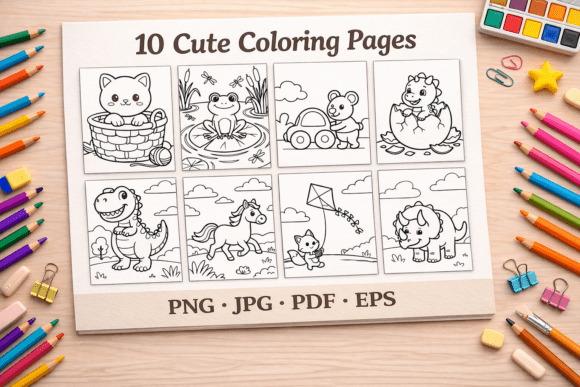
The Cute Bunny Holding Heart Sign Coloring bundle includes multiple formats for a reason. If you rely solely on a standard image, you lose flexibility. Here is what each file does for you:
- PNG File: Ideal for digital distribution. Because it supports transparency, you can drop the bunny into a digital worksheet or a Google Classroom assignment without a white box around it. This is critical for teachers creating blended learning materials.
- JPG File: A universal standard. Perfect for quick previews, thumbnails, or sharing on social media to promote an upcoming activity.
- Print-Ready PDF File: This is your safety net for physical printing. PDFs lock in the layout and resolution. When you open this file, what you see on screen is exactly what will appear on paper. No shifting margins, no weird scaling issues.
- EPS Vector File: This is the file that most beginners overlook, and it is often the most valuable. An EPS file allows you to scale the bunny to the size of a billboard without losing a single line of integrity. Want a tiny sticker for a reward chart? Want a giant banner for a Valentine’s Day bulletin board? The vector file makes that possible.
The better approach: Do not rely on a single format. When you see a resource advertising multiple file types, it is a sign of a well-prepared product. Download the entire bundle and store the EPS and PDF files separately. These are your “master copies.” Resize and export from those files, not from the JPEG.
Misunderstanding Commercial Use for KDP and Etsy
Here is where many well-intentioned small business owners get into trouble. You find a cute resource, you see “Commercial Use Allowed,” and you assume you can use it anywhere with no restrictions. This misunderstanding can lead to copyright claims, account suspensions on platforms like KDP or Etsy, and a lot of wasted time.
The Cute Bunny Holding Heart Sign Coloring page is explicitly marked for commercial use, which is excellent news for creators. However, common mistakes include:
- Reselling the raw files: You cannot download the PNG or EPS and list it on Etsy as a digital download exactly as it is. You must add value. “Commercial Use” means you can use the artwork as a component of a larger product you intend to sell.
- Using it in a way that violates platform specific rules: Some print on demand services have specific requirements about line art.
The better approach: Treat this artwork as a building block. Create something new with it. For example, you can use the Cute Bunny Holding Heart Sign Coloring page as an interior page in a “Valentine’s Day Activity Book” you are compiling for KDP. You can use it as a bonus printable in a larger “Love Themed Classroom Kit” on Etsy. This transforms the asset into a unique product. Keep a folder on your computer with your commercial licenses and a note on how you are using the asset. This documentation is invaluable if you are ever questioned about your rights to the design.
Ignoring Design Complexity and Target Audience
Not all coloring pages are created equal. A common mistake is choosing a design based solely on it being “cute” without considering who will actually be coloring it. A page with intricate, tiny details might frustrate a preschooler, while a page that is too simplistic might bore an older child or adult.
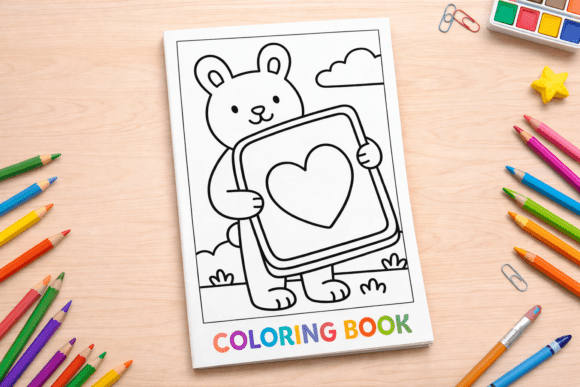
The design of this specific page is deceptively strategic. It features a large, central heart shape and a bunny with clean, bold outlines. Let’s break down why this matters:
- For Toddlers and Preschoolers: The large heart and open spaces are forgiving. Young children are still developing fine motor skills. Bold outlines help them practice staying “inside the lines” without the pressure of complex geometry. This builds confidence.
- For Elementary Learners: The bunny provides context. It isn’t just a shape; it is a character. Teachers can use this to spark a writing prompt. “Why is the bunny holding a heart? Who is it for?” The design supports literacy and social emotional learning, not just art.
- For Adults: While simple, this design is perfect for low stress adult coloring sessions. It acts as a “palette cleanser” between more complex mandalas or patterns. It is also an ideal base for testing color mixing or shading techniques.
The better approach: Assess the motor skills and interests of your target user before assigning the page. Do not assume a simple design is a bad design. In many cases, a well proportioned, simple design with high contrast lines is the most versatile tool you own.
Treating It as a Standalone Activity Instead of a Multipurpose Asset
Perhaps the biggest missed opportunity is using the Cute Bunny Holding Heart Sign Coloring page once and then filing it away. High quality line art is a creative catalyst, but only if you recognize its potential.
Many educators and parents treat coloring pages as busy work. While they are excellent for quiet time, they can be so much more. Here are three ways to extend the life of this single resource:
- Greeting Card Production: Color the page, cut out the bunny and the heart, and glue it onto folded cardstock. Use the EPS file to print the design at 50% size for a smaller, handmade Valentine’s card. This teaches children the concept of repurposing art for functional gifts.
- Sewing and Felt Patterns: Because the lines are clean and the shapes are distinct, the bunny is an excellent candidate for a simple felt plushie or a fabric patch. Open the vector file, print the pieces, and use them as sewing stencils. This is a fantastic advanced project for older students or hobbyists.
- Bulletin Board and Classroom Decor: Print the PDF at 100% size. Have each student color the page differently. Create a “We Love Learning” display using the varied artwork. The consistent outline provides unity, while the individual coloring choices celebrate diversity.
The better approach: Before printing, brainstorm three different subjects or activities that could stem from this one page. If you cannot find at least three uses, you are likely overlooking the flexibility of the design. Store the file in a “Multipurpose Assets” folder so it catches your eye for future projects, not just for Valentine’s Day.
Skipping the Test Print and Paper Selection
It happens to everyone. You print a beautiful worksheet, only to realize the ink bled through the paper, or the black lines look gray and fuzzy. This is rarely the fault of the image itself. It is usually a setup error or a paper mismatch.
The Cute Bunny Holding Heart Sign Coloring page is designed at 300 DPI on an 8.5x11 inch canvas. This is the industry standard for crisp, clear printing. However, even the best file can be undermined by poor printing habits.
Common printing mistakes to avoid:
- Printing in “Draft” mode: This saves ink but thins out the bold lines. Always print line art in “Normal” or “Standard” quality. The design uses bold outlines specifically to hold up well to normal printing, so trust the file and print it properly.
- Using the wrong paper: For coloring pages, thick drawing paper or cardstock is ideal if markers are being used. Standard copy paper works for crayons. If you use markers on thin paper, the ink will bleed through to the next page. Test your tools on a scrap page first.
- Ignoring the bleed setting: If you are compiling this into a KDP book, ensure your PDF includes a proper bleed (usually 0.125 inches). The provided PDF is formatted for standard printing, but if you resize it for a book, remember to account for this.
The better approach: Always run one test print on plain paper. Check the darkness of the lines and the alignment of the margins. Adjust your printer settings from “Fit to Page” to “Actual Size” to ensure the 8.5x11 proportions remain exact. A few seconds of testing can save you a ream of wasted paper and a lot of frustration.
Putting It All Together
The difference between a frustrated user and a successful creator often comes down to preparation. The Cute Bunny Holding Heart Sign Coloring page is more than just a cute rabbit. It is a carefully constructed asset designed for flexibility and quality. By paying attention to file formats, respecting licensing boundaries, matching the design to the user, and thinking beyond the single coloring session, you unlock the true value of the resource.
Next time you download a printable, take five minutes to check the resolution, organize your license, and plan your multipurpose strategy. Start with the right foundation, and your projects will consistently look professional, feel intentional, and delight the end user.