Cute Bear Cooking with Mouse Coloring – Getting It Right for Your Projects
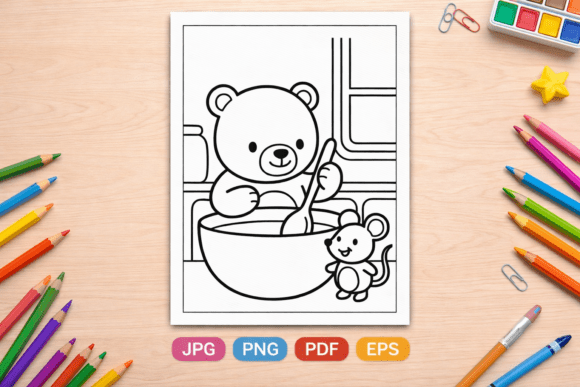
If you have been browsing for children’s coloring content, you have likely come across a design titled “Cute Bear Cooking with Mouse Coloring.” This black-and-white line art features an adorable teddy bear mixing ingredients in a bowl while a small mouse stands nearby. The clean, bold outlines make it ideal for toddlers, preschoolers, and young learners. But whether you plan to include it in a classroom worksheet, a homeschool activity pack, a KDP interior, or an Etsy printable, there are a few pitfalls that can turn a great resource into a frustrating experience. Understanding these common mistakes will save you time, money, and revision headaches.
Why This Coloring Page Deserves a Closer Look
At first glance, a coloring page may seem like a simple product. But the “Cute Bear Cooking with Mouse” illustration is more than just a cute drawing. Its kitchen theme and friendly characters provide a natural opportunity to combine creativity with everyday vocabulary, fine motor practice, and even pretend play. For educators and parents, it’s a tool. For sellers and creators, it’s a product that needs to meet certain standards to be both usable and commercial. And that is where many people make their first mistake.
Mistake 1: Ignoring the File Format and Resolution Requirements
One of the most overlooked details when downloading or purchasing a coloring page is the file format. The bundle for this particular design includes PNG, JPG, PDF, and EPS vector files, all at 300 DPI and in a print-ready 8.5×11 inch layout. Yet many users grab only the JPG and assume it will work everywhere. The reality is that a JPG can lose sharpness when resized, and you cannot edit elements easily. If you are creating an activity book for KDP, a low-resolution image will look blurry in print. If you are selling on Etsy, a single format may not satisfy customers who want either digital or print options.
Better approach: Always download the full bundle. Use the PDF for direct printing. Use the EPS vector file if you plan to adjust the size, remove the background, or change the thickness of lines. The PNG file works well for digital coloring apps or mockups. Keep all formats in your resource folder so you can match the file to the intended use.
Mistake 2: Overlooking Commercial Use Limitations
The bundle description states that commercial use is allowed. Many beginners assume that gives them unlimited rights to resell the design as their own or include it in products without attribution. But “commercial use” can vary. You need to check the exact license terms that come with the file. Some bundles allow you to use the coloring page in a paid product (like a KDP book) but do not allow you to sell the raw image as a standalone item. A common misunderstanding leads to copyright violations and product takedowns.
What to do: Read the license or terms of use that accompany the download. If it is unclear, contact the seller or creator. Keep a copy of the license terms in your project folder. When in doubt, treat the design as a component of a larger work, not as the product itself.
Mistake 3: Assuming All Coloring Pages Are the Same Quality
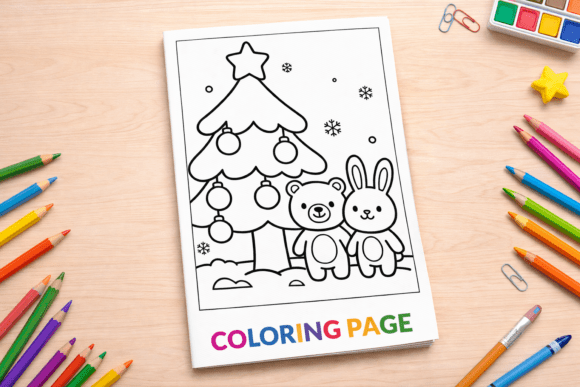
Not all line art is created equal. A well-designed coloring page like this one has bold, consistent outlines that are easy for small hands to color within. Cheaply made pages often have thin, uneven lines or awkwardly placed details that frustrate young children. If you are using the page for teaching or for a book that will be printed, thin lines can disappear during the printing process, especially if the printer is not set to high quality.
How to evaluate: Look at the sample image closely. Check for line thickness, closed shapes, and clear separation between elements. The bear and mouse should be easy to distinguish from the mixing bowl and background. If the lines are too thin or the design is cluttered, children will struggle. The 300 DPI specification is a good indicator of quality, but also check that the art is meant for the age group you are targeting.
Mistake 4: Using the Wrong Paper or Sizing
Even with a perfect file, the physical result depends on the medium. Coloring pages printed on copy paper can bleed with markers or tear easily. For toddlers and preschoolers, thicker paper (at least 80 lb or cardstock) prevents frustration. Moreover, the standard 8.5×11 inch size is great for home printers, but if you plan to include it in a book or a booklet, you may need to adjust margins or trim size.
Practical fix: If you are printing for classroom use, test a sample on your intended paper before running a bulk print. For KDP interiors, use the PDF file and import it into your layout software (like Canva or InDesign). Make sure there is enough white space around the illustration so that no part gets cut off when trimmed. The vector EPS file is especially helpful if you need to scale the image down for a smaller book format without losing quality.
Mistake 5: Missing the Educational and Marketing Potential
Many people treat a coloring page as just a filler activity. That is a missed opportunity. The kitchen theme with a bear and mouse can spark conversations about cooking, teamwork, measurements, or healthy ingredients. Teachers and parents can turn this one page into a mini-lesson. Sellers can add value by providing a colored example, a recipe card, or a short story prompt alongside the line art.
Example: Instead of offering the bare coloring page on Etsy, consider packaging it with a simple follow-the-dots or a word bank of kitchen vocabulary. This increases perceived value and justifies a higher price. For a homeschool worksheet, you could ask the child to draw three more ingredients that the bear might use. The cute bear and mouse are approachable characters that children love, so lean into that charm.
Mistake 6: Neglecting the Vector File for Customizations
If you are a creator or small business owner, the EPS vector file is your best friend. Yet many users ignore it because they are unfamiliar with vector graphics. Vector files allow you to change line colors, adjust line thickness, remove elements, or combine the bear and mouse with other illustrations. This is crucial if you want to create a unique product that stands out from the hundreds of similar coloring pages on Amazon or Etsy.
Getting started: You don’t need expensive software. Free tools like Inkscape or even some online vector editors can open EPS files. Start by opening the file and experimenting with resizing. If you want to create a coloring book with a consistent style across all pages, using vector art from the same source ensures uniformity. The black-and-white line art is a blank canvas, and the vector format gives you the flexibility to tailor it to your project.
What to Check Before You Download or Purchase
Before hitting the “buy” or “download” button on a “Cute Bear Cooking with Mouse Coloring” bundle, run through this quick checklist:
- Resolution: Is it at least 300 DPI? Anything lower will look pixelated when printed.
- Format variety: Does it include at least a PDF and a vector file (EPS or SVG)? PNG and JPG are nice extras, but PDF and vector give you the most flexibility.
- Commercial license: Are you allowed to use it in products you sell? If the license is vague, ask the seller.
- Design cleanliness: Are the lines bold and closed? Are there too many tiny details for a toddler?
- Page size: Is it 8.5×11 or adjustable? If you need a different size, the vector file is essential.
Turning a Simple Coloring Page into a Reliable Resource
The true value of a coloring page lies not just in the art but in how you use it. Whether you are a teacher preparing a last-minute activity, a homeschooling parent building themed lessons, or a creator assembling a KDP activity book, the “Cute Bear Cooking with Mouse” design can serve multiple purposes. By avoiding the common mistakes mentioned above—from file format oversights to licensing confusion—you ensure that your final product looks professional, works properly, and meets your audience’s expectations.
Take a few minutes to check the details before you start, and you will save yourself hours of rework. A well-prepared coloring page can become a go-to item in your toolkit, bringing delight to children and confidence to you as the creator. The bear and mouse are ready to help you cook up something great—just make sure you have the right ingredients in place.